
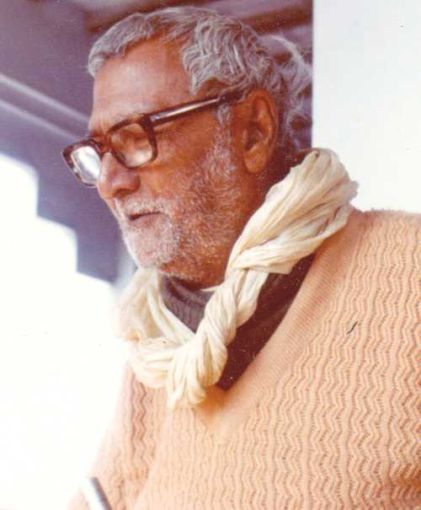
(Adapted from a talk recorded on 28th August 1981)
People guided by their own saṁskāras and mental imagination, do not understand what is real spiritual truth. For them the physical continuation itself is the guru-parampara. But those that have got their spiritual eyes awakened, they will observe, for example, what was there in the first ācārya, is not to be found in the second or the third. Then again the same standard of purity is found in the fourth ācārya.
It is blind tenacity to stick to the physical, to make much of the physical thing, the material thing. We must make ourselves free from material contamination and try to understand the value of spiritual truth. To truly understand a spiritual lineage we must give up the material consideration.
In the Bhāgavatam we find that different philosophies, including atheistic philosophies, emerge due to varigatedness of material nature (prakṛti vaicitryāt), and the same is passed down through tradition (pāramparyeṇa). Therefore, it should be acknowledged that the material flow will always tamper with the spiritual current, disturbing its purity. The Lord also says in the Bhagavad Gītā (4.2), sa kāleneha mahatā yogo naṣṭaḥ parantapa, “With the passage of time, the teaching has nearly been lost.”
To counteract such interruptions, attempts are always made to keep up the purity of the current. It is a living thing, not a dead thing. The vigilant eye is always there. Whenever necessary, help comes from above, to keep the current pure and in good flow. Sometimes Kṛṣṇa has to come Himself, and sometimes He sends His devotee, to reinstate the current to its former pure state. In the Bhagavad Gita 4.7, Kṛṣṇa says—
yadā yadā hi dharmasya glānir bhavati bhārata
abhyutthānam adharmasya tadātmānaṁ sṛjāmy aham
O Bhārata, whenever there is a decline of religion and an uprising of irreligion, I personally appear.
Physical continuation is not a safe proposal. It is admitted that all may not come to the same standard, and therefore some will have to be rejected. But if the standard is found elsewhere substantially, that may be taken in. Moreover, the spiritual line may not always be a continuous bodily succession, and sometimes there can even be a gap of several generations.
We see such interruptions even in physical lines. Prāhlāda is a devotee, whereas his son, Virocana, was a demon, but his grandson, Bali, was again a devotee. Even in the history of scientific research, we find that what Galileo began was later developed by Newton, and much later still, Einstein pushed that understanding even further. An expert will notice and mark the development of the research in an interrupted line of these personalities. In a spiritual line also we can see such interruptions due to the influence of māyā.
We are to trace only the spiritual current of knowledge. Wherever Kṛṣṇa appears I must run towards that side. My interest is with Him. Not that, “Why did Krsna appear here and why not there?” If I have got real appreciation and a capacity to appreciate the real thing, I must go wherever Kṛṣṇa appears. Wherever I feel the presence of my Lord in an intense way I should be attracted to that side. If I am blind that is another case. Then I must suffer for my inability. But any person who has the ability to understand these things, and has got the proper insight, will run towards wherever he can get some help.
There is a Bengali proverb, “Which is more useful — the nose or the breath?” The intelligent section will say that the breath is more useful than the nose. We want the substance, not the form.
Once a brāhmaṇa was given a choice between Ganges water in an earthen pot and ordinary water in a golden pot. The brāhmaṇa in the story chooses the Ganges water in the earthen pot. Not the container, but the substance contained should be given real importance. I am not this physical body. My own identification should be challenged if I am much addicted to the physical guru-parampara. Who am I? Am I this physical body? I am spiritual, therefore I shall have to see with spiritual eyes.
Persons thirsty for spiritual truth will accept the pure line wherever it may appear. Even if it appears in the Rāmānuja sampradāya, or Madhva sampradaya, or Nimbārka sampradaya—we will accept it for our own interest. We find that Rāmānuja has made substantial contributions to Vaiṣṇavism, Madhvācarya has given sufficient contribution to Vaiṣṇavism, Nimbārka has also done so. As much help we can get from them substantially, we will accept that, and we may even reject persons in our own sampradāya if they have deviated from the real teachings.
Baladeva Vidyābhuṣaṇa was very akin to Madhva sampradāya, but when he came in connection with Viśvanātha Cakravarti Ṭhākura, he showed much interest towards Gauḍīya Vaiṣṇavism. He has also written commentaries on the Bhāgavatam, Jīva Gosvāmi’s Ṣaṭ-sandarbhas, and many others. His enlightened thought is a valuable contribution to our sampradāya. We cannot dismiss him, and he is our guru.
Whereas, the sahajiyas and the so-called physical current-keepers are in the line of Mahāprabhu in a physical sense. But they are tampering, mutilating and enveloping the real teachings of Mahāprabhu. They are not considered even though in a physical sense they are in the line of Mahāprabhu, Rūpa, Sanātana and others. When we go to judge the very spirit of the thing, we see that they are nowhere; they are only a line of physical imitation.
First we must understand who is a guru and then the question of guru-parampara. Is guru a body? Is guru just a renunciate? Is guru a formal thief, a hypocrite appearing like a sādhu but doing something else within? The first question of importance is who is a guru, and then a chain of them coming down, the light coming down, the knowledge coming down in support of divine love. Wherever I find support for that, I must bow my head to those places and make progress. I’m not a formalist, or a materialist, but a substantialist. Not a fashionist, or imitationist, but a realist. That should be our temperament. The guide who has exclusive devotion to Kṛṣṇa, to Mahāprabhu, he is my guru; whatever he may be externally.
kiba vipra, kiba nyasi sudra kene naya
yei krsna-tattva vetta sei guru haya
Whether a person is a brāhmaṇa, a sannyāsi, or a śudra, if he knows the science of Kṛṣṇa, he is to be accepted as guru. (Caitanya-caritamṛta Madhya-līlā, 8.127)
I must be thankful to those that are helping my spiritual understanding in the real sense, not just in a formal way. Sometimes it is possible that my uncle may be my guardian instead of my father. The line of interest, that is to be considered. That has got the most importance.
Śāstra-guru, śikṣa-guru, dikṣa-guru, nāma-guru—wherever any contribution to the line, by the will of Kṛṣṇa, has been found, taking them all together, a real line has been given to us in keeping with the flow of the real truth of the highest type in this world.
Particularly, wherever there is devotion and the correct consideration about Mahāprabhu, our guru is to be traced there. The guru is not in the physical form. The guru is the embodiment of the pure thought and understanding that Mahāprabhu has imparted to save us.
A śīkṣa-guru parampara has thus been given in this way by our Śrīla Prabhupāda Bhaktisiddhānta Sarasvatī Ṭhākura. This is, of course, the main line, and it should be accepted in a general way. But, in reality, all genuine Vaiṣṇavas are more or less our śikṣa-gurus.
Mahāprabhu told Rāmānanda Rāya, “By the grace of Kṛṣṇa you have acquired that spiritual wealth; therefore, show it to Me. You are the true capitalist of this divine treasure, and I have come to reveal to the world your wealth. Do not hesitate—come forward and show it.” Rāmānanda replied humbly , “It is Your wealth, and You are compelling me to bring it forth. I am only an instrument in Your hands. Whatever You desire me to say, I shall say.” In this way, the dialogue between Mahāprabhu and Rāmānanda continued.
Rāmānanda is not in the guru-parampara, but still we are so much indebted to him in one sense. He is more than many others who are in the parampara. Rādhārāni is also not in the guru-parampara. Should we dismiss Her? Hare Kṛṣṇa! Hare Kṛṣṇa! Gaura-Haribol! Gaura-Haribol! Nitai! Nitai!