
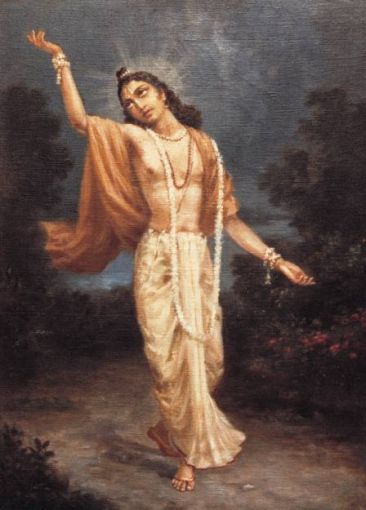
The Padma-purāṇa verse sampradāya vihīna ye mantrās te niṣphalā matāḥ, mentions four authentic Vaiṣṇava sampradāyas active in Kali yuga — Śrī, Brahma, Rūdra, and Sanakādi. Śrī sampradāya is headed by Rāmānujācarya, Brahma sampradāya by Madhvācarya, Rūdra sampradāya by Viṣnu Svāmi, and Sanakādi sampradāya by Nimbārkācarya. The Vaiṣṇava sampradāyas are all auspicious simply by their unambiguous acceptance of the transcendental form and attributes of the supreme person Viṣṇu as real, and their relentless opposition to vivartavāda (theory of illusion) of Śaṅkarācarya, that reduces it to mere illusion. Still, each of these sampradāya slightly differ in their philosophy from each other, otherwise there wouldn’t be a need to differentiate them at all. However, the fact that all of them are regarded as authentic, suggests the plurality of valid perspectives that articulate in different ways, the philosophical truths concerning the Supreme Lord (īśvara), the innumerable living entities (jīvas), and the cosmos (jagat).
Śrīla Bhaktivinoda Ṭhākura in his Vaiṣṇava-siddhānta-mālā mentions that all the four Vaiṣṇava saṁpradāyas are auspicious and have no actual disagreements—
Question: How many sampradāyas do the Vaiṣṇavas have?
Answer: There are four principal Vaiṣṇava doctrines: 1) Dvaita, 2) Viśiṣṭa-advaita, 3) Dvaita-advaita, 4) Śuddha-dvaita
Question: Are there any ontological disagreements among their views?
Answer: There is no actual disagreement between their doctrines, for they are all saviśeṣa-vādīs (believers in eternal distinction). None of them tolerate the philosophy of kevala-abheda (only oneness). All of these four Vaiṣṇava groups have affection for the Lord, and thus they accept the true principles of the Lord’s energy (bhagavat-śakti). Those of the dvaita school (dvaita-vādīs) say that those of the exclusively advaita school are totally blind. This is because the dvaita-vādīs can see the eternality of the dvaita-vāda (doctrine of duality). This is the opinion of Sri Madhvacarya. The viśiṣṭa-advaita-vādīs say that all things are endowed with attributes, and therefore can never be advaita or non-dual. The dvaita-advaita-vādīs are very outspoken in their views, which clearly denounce the impersonal philosophy of advaita. The doctrine of śuddha-advaita also condemns the advaita philosophy and establishes its own conclusion by emphasizing the pure form of eternal attributes. By seeing and thoroughly understanding an overview of these four schools of Vaiṣṇava doctrine, it is obvious that there is no disagreement among them.
In around 1503 AD, Śrī Caitanya Mahāprabhu accepted dīkśa from Śrī Īśvara Purī in Gaya, and thus graced the Madhva sampradāya. In this regard, Śrīla Bhaktivinoda Ṭhākura mentions the following in his Vaiṣṇava-siddhānta-mālā —
The special characteristic of Madhvācārya’s doctrine is that it very clearly defeats the faulty mistakes of the advaita philosophy. By maintaining this forceful position, the distress caused by the impersonal philosophy is cast very far away. Therefore, in order to bring about safe and sure benefit for the unfortunate conditioned souls who are weakened from the onslaughts of Kali-Yuga, Śrī Caitanya Mahāprabhu accepted the doctrine of Śrī Madhvācārya. But by doing so He did not minimize the importance of the other three Vaiṣṇava doctrines whatsoever. Whichever type of saviśeṣa-vada (philosophy of eternal distinction) one accepts is just fine, for it will certainly bring eternal auspiciousness.
The Gauḍīyas accept Śrī Caitanya as none other than Śrī Kṛṣṇa Himself who appears in the mood of His supreme devotee (See Appendix A). In Śrī Jīva Goswāmī’s words, Śrī Caitanya is svabhajana vibhajana prayojana avatarī, which means, the avatārī (the source of all avatāras) who descended with the specific purpose (prayojana) of distributing (vibhajana) the highest form of bhajana (loving worship) that He Himself (sva) performs, specifically prema-bhakti towards Śrī Kṛṣṇa.
The wide-ranging philosophical, theological and cultural developments introduced by Mahāprabhu and His followers within a branch of the Madhva sampradāya naturally raised questions regarding the precise identity of Mahāprabhu’s own line. The orthodox Madhva line is unable to fully appreciate these disruptive developments that variously diverge from their long held philosophy and tradition. Whereas, for some dubious reasons, certain deviant groups within the Gauḍīya line claim that Mahāprabhu instituted a new sampradāya altogether. [1, p. xxi] The sober section, however, would perceive a continuity and harmonious culmination of all four Vaiṣṇava sampradāyas within the teachings of Śrī Caitanya Mahāprabhu.
During His manifest pastimes spanning forty-eight years, Śrī Caitanya Mahāprabhu is not known to have personally written any literature, apart from the eight verses of the Śikṣāṣṭakam. His philosophical and theological conclusions are gleaned primarily from His instructions to Rūpa and Sanātana Gosvāmīs, His esoteric conversation with Rāmānanda Rāya, and His two debates against the impersonalists, namely, Prakāśānanda Sarasvatī of Vāraṇāsi and Sārvabhauma Bhaṭṭācārya of Purī.
Mahāprabhu’s biographies, mainly Caitanya Caritāmṛta and Caitanya Bhāgavata, that record these exchanges, are monumental treatises that not only establish His philosophy but also demonstrate the ideal standards of Vaiṣṇava sadācāra within the dealings between the Lord and His dear devotees. Mahaprabhu and His entourage enacted the precepts of pure devotion for the benefit of everyone. Even a cursory study of the biographies will at-once make one understand the profound nature of devotion, and how the devotees of Mahāprabhu are epitomes of humility and surrender in the truest sense of the terms.
The activities and mood of Mahāprabhu do not give the impression that He was attempting to establish or propagate a new philosophical system. Mahāprabhu’s travels to the holy places in South India, and Vṛndāvana, post His sannyāsa, were not particularly meant to spread a philosophy, but rather to awaken Kṛṣna-bhakti among the masses through the extension of the saṅkīrtana movement that He had inaugurated at Māyāpur, Bengal. Other than that, Mahāprabhu was keen to taste the devotional attitudes of different groups of devotees He met, guide them where necessary, and bless them by accepting their services. During His South-India tour, Mahaprabhu’s discussion regarding the position of Śrī Lakṣmidevī with Venkaṭa Bhaṭṭa at Śrī Rangam, the discovery of the fifth chapter of the Brahma-Saṁhita at Adi Keśava temple in Tamil Nadu, His meeting with the Tattvavādi ācārya at Uḍupi, and His deep conversation with Rāmānanda Rāya near the Godāvari river, are philosophically prominent.
Mahaprabhu’s mild rebuke of Śrī Raghuvarya Tīrtha in Uḍupī during a short discussion on the supremacy of bhakti over karma and jñāna, is erroneously considered by some as a rejection of Madhva sampradāya. Madhvācārya’s position on bhakti being beyond karma, jñāna, and mokṣa is well established from his writings—bhaktyā jñānaṁ tato bhaktis tato dṛṣṭis tataś ca sā, ato muktis tato bhaktiḥ saiva syāt sukha-rūpiṇī, “From devotion comes knowledge; from that, further devotion; from that, direct realization; and from that, liberation. Beyond liberation, devotion alone remains — and she is of the very form of supreme bliss.” (Anu-vyākhyāna iii 4.232). Therefore when Mahāprabhu says tomāra sampradāya, He is addressing a particular group within the Mādhvas and not the whole sampradāya.
Mahāprabhu did not write a separate commentary on the Brahma Sūtras like the ācāryas of other sampradāyas have done, nor did He ask any of His immediate followers to do so. However, He personally instructed and directed Śrī Rūpa and Śrī Sanātana Gosvāmīs in separate meetings, to systematically present the principles of śuddha-bhakti. Inspired and guided by Mahāprabhu, the brothers made unparalleled contributions through works like Śrī Bhakti-Rasāmṛta-Sindhu, Śrī Bṛhat-Bhāgavatāmṛta, and many others. Their works reveal the finest domain of Śrī Kṛṣṇa and the stages of progress of śuddha-bhakti from śraddha to the highest attainment of prema, never before articulated with such depth, clarity, and śāstric authority.
Mahāprabhu Himself was the abode of perfect philosophical conclusions as expounded in the Śrīmad Bhāgavatam, which is considered the natural commentary to the Vedānta Sūtra (artho’ yam brahma-sūtrānām). It is also known that Mahāprabhu revered Śrīdhara Svāmī’s Bhāvārtha-dīpikā commentary on the Bhāgavatam more than anyone else’s. Regarding this Śrīla B.R. Śrīdhara Mahārāja says,
Madhvācārya, in his conception of how one should see the ācārya—the spiritual master, could not harmonize Brahma’s bewilderment (Brahma-vimohana-līla). After all, he is the sampradāya guru, the foremost guru of the tradition, the Brahma-Madhva sampradāya. So Madhvācārya omitted these two chapters on the illusion of Brahma from Śrīmad-Bhāgavatam. But Mahāprabhu did not. He accepted Śrīdhara Swāmī’s edition, which is in accordance with the śuddha-advaita philosophy of Viṣṇuswāmī. The Viṣṇuswāmī sampradāya follows rāga-mārga—spontaneous devotion. Śrīdhara Swāmī included those two chapters with his commentary, and Mahāprabhu accepted that, and it is corroborated in Caitanya-caritāmṛta. [2, p. 54]
It was not until the composition of the Ṣaṭ-sandarbhas by Śrī Jīva Goswāmi that Śrīmad Bhagavatam was interpreted in strict alignment with Mahāprabhu’s conclusions. Śrī Jīva Goswāmī is one of the Ṣaḍ-goswāmī’s of Vṛndāvana, an intimate associate and disciple of Śrī Rūpa and Śrī Sanātana Goswāmīs. In the Ṣaḍ-sandarbhas, six treatises written in Sanskrit, along with the Krama Sandarbha, Jiva Goswāmī lays out all aspects of the Bhāgavata philosophy profusely quoting from the śāstras to support each conclusion. Jīva Goswāmī’s Ṣaṭ-sandarbhas may be regarded as the definitive core philosophical work of the Gauḍīya Vaiṣṇava tradition of Śrī Caitanya Mahāprabhu.
Śrīla B.R. Śrīdhara Mahārāja makes further observation regarding Mahāprabhu’s philosophical position with respect to Śrīdhar Svāmī’s —
Mahāprabhu mainly supported Śrīdhara Svāmī because he saved the devotees from the interpretation of Śaṅkarācārya in the Gītā and the Bhāgavatam. Śrīdhara Svāmī has admitted and proved God as a Person, but there are elements of impersonalism also. Śrīdhara Svāmī is mainly a Vaiṣṇava who followed viśuddha-advaita philosophy of Viṣṇu Swāmī, whereas Mahāprabhu’s creed was acintya-bhedābheda. So Jīva Gosvāmī, who was a strict follower of Mahāprabhu Śrī Caitanyadeva, slightly differed from him in the interpretation of the Bhāgavatam. [3]
Śrī Baladeva Vidyābhūṣaṇa comments the following in his Tattva-dīpika commentary to Jīva Goswāmī’s Tattva-Sandarbha, anuccheda 27—
śrīdhara-svāmino vaiṣṇavā eva, taṭṭīkāsu bhagavad vigraha guṇa vibhūti dhāmnāṁ tat-pārṣada-tanūnāṁ ca nityatvokteḥ, bhagavad-bhakteḥ sarvotkṛṣṭa-mokṣānuvṛttyor ukteś ca. tathāpi kacit kacin māyāvādollekhastadvādino bhagavad-bhaktau praveśayitu baḍiśāmiṣārpaṇa-nyāyenaiveti viditam iti. śuddha-vaiṣṇava iti — yathā sāṅkhyādi-śāstrāṇām aviruddhāṁśaḥ sarvaiḥ svīkṛtas tadvat idaṁ bodhyam, “Śrīdhara Svāmī was indeed a Vaiṣṇava, because in his commentaries he affirms the eternal nature of the Lord’s form, qualities, powers, abodes, and the forms of His attendants. He also states that devotion to the Lord is the supreme form of liberation. Even so, it is known that certain references which appear to echo Māyāvāda were adopted only to draw followers of that doctrine towards devotion, just as bait is placed on a fish-hook. Therefore, just as pure Vaiṣṇava philosophy accepts the non-contradictory portions of Sāṅkhya and other such systems, similarly parts of Śrīdhara Svāmī’s writings that follow pure Vaiṣṇava concepts are quoted.”
The circumstances for the composition of a Gauḍiya commentary to the Brahma-sūtras were created in the 18th century, after the arrival of the deity of Śrī Govindadevjī in Jaipur during the rule of Sawai Jai Singh II. Perceiving Sawai Jai Singh’s sympathy towards the Gauḍīyas and affinity towards Rādha-Kṛṣṇa worship, the Rāmānandi sect fearing loss of influence began questioning the legitimacy of Gauḍīya traditions and philosophy. Since the Gauḍīyas, although descending from the Madhva sampradāya, did not align with their traditions, the Rāmānandi’s countered all śāstric evidences and the claim of Śrī Caitanya Mahāprabhu’s primacy, by stating, saṁpradāyaś catvāraḥ pañcamo naiva vidyate, pādmokta vacanenaiva nirṇītaṁ paṅḍitaiḥ kila [4, p. 66], “There are four sampradāyas; a fifth does not exist. This has been determined by learned scholars on the basis of the statements found in the Padma Purāṇa.”
When the word reached Vṛndāvana about the predicament, Śrīla Viśvanātha Cakravarti, who was in his advanced age, dispatched Baladeva Vidyābhuṣaṇa along with his (Viśvanātha’s) disciple Kṛṣṇadeva Sārvabhauma to resolve the matter. Śrī Baladeva Vidyābhuṣaṇa was trained in the Madhva philosophy before he fully accepted the Gauḍīya philosophy and dīkṣa from Śrī Rādha-Dāmodara Goswāmī of the Śyāmānanda-parivāra. He studied the Ṣaṭ-Sandarbhas under Śrīla Viśvanātha Cakravartī Ṭhākura and became thoroughly acquainted with all aspects of Mahāprabhu’s philosophy. He was therefore the most qualified candidate to present Mahāprabhu’s philosophy on the basis of the Madhva philosophy.
After a brief discussion with the opposition, Śrī Baladeva requested time from the King to compose a Gauḍīya commentary to the Brahma Sūtras, which the King readily granted. By the grace of Śrī Govindadevjī, Baladeva could produce a masterly commentary within a very short period of time, that he duly named the “Govinda-bhaṣya”. The Govinda-Bhaṣya is based on Madhva’s commentary, but carries all the hallmarks of Śrī Caitanya Mahāprabhu’s philosophy—acintya-bhedābheda. On the unquestionable strength of this commentary, the Rāmānandi’s withdrew their opposition, and the position of the Gauḍiyās was thereby preserved.
The fact that the Gauḍīya philosophy is based upon the Madhva philosophy is specifically clear from the work Prameya-ratnāvali wherein Śrī Baladeva Vidyābhuṣaṇa rephrases the prameya-śloka of Śrī Vyāsa Tīrtha in the following way—
śrī-madhvaḥ prāha —
viṣṇuḥ paratamam-akhilamāmnāya-vedhyaṁ ca viśvaṁ
satyaṁ bhedaṁ ca jīvān hari-caraṇa-juṣas taratamyaṁ ca teṣām
mokṣaṁ viṣṇv-aṅghri-lābhaṁ tad-amala-bhajanaṁ
tasya hetuṁ pramāṇaṁ
pratyakṣādy-trayaṁ cety upadiśati hariḥ kṛṣṇa caitanya-candraḥ
Śrī Madhva declares that 1) Lord Viṣṇu is Supreme; 2) He is to be known from all sacred scriptures; 3) the world is real; 4) difference is real; 5) the living entities are servants of Lord Hari’s lotus feet; 6) there is gradation amongst them; 7) liberation is the attainment of Lord Hari’s lotus feet; 8) pure devotion towards Him is the cause of liberation; and 9) direct perception, inference, and verbal testimony are the three kinds of evidence. These truths are also taught by Lord Hari Himself in His appearance as Śrī Kṛṣṇa Caitanya-candra. (Prameya-ratnāvali, verse 8)
Śrīla Jīva Gosvāmī was the first to associate the term acintya-bhedābheda to Mahāprabhu’s conceptions, in his Sarva-samvādini commentary to Paramātma-sandarbha (77-78)*. But it was not until the modern revival of the Saṅkīrtana movement by Śrīla Bhaktivinoda Ṭhākura and his successors that the term gained prominence in identifying Mahāprabhu’s philosophy. The substance of the doctrine, however, entirely permeates the writings of all Gauḍīya ācāryas, just as they understood from none other than Śrī Caitanya Mahāprabhu Himself.
There is a theory that Jīva Gosvāmī originally found acintya-bhedābheda conception in Madhvācārya’s Bhāgavata-tātparya-nirṇaya (11.7.51), where he quotes a non-extant tantra-śāstra called Brahmatarka, known only from the writings of Madhvācārya [5, p. 96]. Although Jīva Goswāmi explicitly lists Brahmatarka in his Tattva-sandarbha (anu. 28) as one of the works that he accepts solely based on the credibility of Madhvācārya, he does not quote the verse in question (avayavyavayavānāṁ ca guṇānāṁ guṇinastathā…) anywhere in his works as one would expect, nor does the verse lend itself fully to support acintya-bhedābheda. Therefore, the theory is, at best, speculative.
Similarly, it is pointless to claim Madhva’s support of the bhedābheda conception by reading meanings into his statement about the relation between jīva and īśvara, when he says ataścāṁśatvam uddiṣṭaṁ bhedābhedau na mukhyataḥ (Brahmasūtra-bhāśya ii 3.43). There is no confusion in the position of Madhva that essentially there can only be difference (bheda) between jīva and īśvara. He designates jīvas as vibhinnāṁśas of īśvara, where he defines aṁśatva in the sense of belonging (tat-saṁbandhitvam), having dependence (tadadhīnasattā), and similarity (tatsadṛśyam) but not as part and parcel. The similarity and dependence gives a sense of non-difference (abheda) between jīva and īśvara, but in essence (svarūpa) Madhva only accepts difference (bheda). Madhva’s statement—bhedābhedau na mukhyataḥ, means that in this case both bheda and abheda cannot be accepted as primary. Only bheda is taken as primary, while abheda is understood figuratively [6, p. 120-121]. Madhvācārya defines this kind of relation to reconcile conflicts between bheda and abheda scriptures.
The complete expression of acintya-bhedābheda philosophy is first seen in the teachings of Śrī Caitanya Mahāprabhu. In Caitanya Caritamṛta, we find that Mahāprabhu enumerates Kṛṣṇa’s śaktis and their inconceivable nature in the following way, quoting the Viṣṇu-purāṇa —
sūryāṁśa-kiraṇa, yaiche agni-jvālā-caya
svābhāvika kṛṣṇera tina-prakāra ‘śakti’ haya
Just as the rays of the sun and the multitude of flames from fire, so too Kṛṣṇa naturally possesses three kinds of energies. (CC Madhya 20.109)
eka-deśa-sthitasyāgner jyotsnā vistāriṇī yathā
parasya brahmaṇaḥ śaktis tathedam akhilaṁ jagat
Just as the illumination of a fire, which is situated in one place, is spread all over, the energies of the Supreme Personality of Godhead, Parabrahman, are spread all over this universe. (Viṣṇu-purāṇa 1.22.53 quoted in CC Madhya 20.110)
kṛṣṇera svābhāvika tina-śakti-pariṇati
cic-chakti, jīva-śakti, āra māyā-śakti
Lord Kṛṣṇa naturally has three energetic transformations (śakti-pariṇati), and these are known as the spiritual potency (cit-śakti), the living entity potency (jīva-śakti) and the illusory potency (māyā-śakti). (CC Madhya 20.111)
viṣṇu-śaktiḥ parā proktā kṣetrajñākhyā tathā parā
avidyā-karma-saṁjñān yā tṛtīyā śaktir iṣyate
Viṣṇu-śakti (cit-śakti) is spiritual, and so is jīva-śakti (called kṣetrajña) also spiritual. The third energy, called avidyā and karma, is accepted as an inferior potency (māyā-śakti). (Viṣṇu-purāṇa 6.7.61 quoted in CC Madhya 20.112)
śaktayaḥ sarva-bhāvānām acintya-jñāna-gocarāḥ
yato ‘to brahmaṇas tās tu sargādyā bhāva-śaktayaḥ
bhavanti tapatāṁ śreṣṭha pāvakasya yathoṣṇatā
In general, the energies (śaktis) of all entities are beyond the grasp of conceivable knowledge (acintya). Therefore, O best of the sages, the creative and other such powers are indeed the energies of Brahman, just as heat belongs to fire. (Viṣṇu-purāṇa 1.3.2 quoted in CC Madhya 20.113)
In the Bhāgavata-sandarbha (Anu. 14), Śrīla Jīva Goswāmī quotes Śrīdhara Svāmī’s commentary to the above verse, where he says,
yad vā, acintyā bhinnābhinnatvādi-vikalpaiś cintayitum aśakyāḥ, kevalam arthāpatti-jñāna-gocarāḥ santi. yad evam, ato brahmaṇo ’pi tās tathāvidhāḥ śaktayaḥ sargādi-hetu-bhūtāḥ bhāva-śaktayaḥ svabhāva-siddhāḥ śaktayaḥ santy eva. pāvakasya dāhakatvādi-śaktivat. ato guṇādi-hīnasya ’py acintya-śaktimattvād brahmaṇaḥ sargādi-kartṛtvaṁ ghaṭata ity arthaḥ, “Or else, these energies cannot be conceived (acintya) through contrasting truths such as being simultaneously different (bhinna) and non-different (abhinna) from brahman; they fall only within the scope of knowledge derived from arthāpatti (postulation). If this is so, then Brahman possesses such inherent energies that serve as the causes of creation and so forth, just as fire possesses the power of burning. Therefore, even though Brahman is devoid of material qualities, creation and related functions are possible for Him due to His inconceivable energies (acintya-śakti).”
Mahāprabhu classifies the śaktis of the Lord as internal, marginal, and external potencies.
antaraṅgā--cic-chakti, taṭasthā--jīva-śakti
bahiraṅgā--māyā,--tine kare prema-bhakti
The spiritual potency of the Supreme Personality of Godhead also appears in three phases — internal (cit-śakti), marginal (jīva-śakti) and external (māyā). These are all engaged in His devotional service in love. (CC Madhya 6.160)
Here, the jīva is classified as marginal potency (taṭastha śakti) and māyā as external potency (bahiraṅga śakti). In this way, the creation and the living entities are part and parcel of the Lord, inconceivably one and different.
Mahāprabhu describes jīva’s position in relation to īśvara in the following way—
jīvera ‘svarūpa’ haya--kṛṣṇera ‘nitya-dāsa’
kṛṣṇera ‘taṭasthā-śakti’ ‘bhedābheda-prakāśa
It is the living entity’s constitutional position to be an eternal servant of Kṛṣṇa because he is the marginal energy of Kṛṣṇa and a manifestation simultaneously one and different from the Lord. (CC Madhya 20.108)
Mahāprabhu does not characterize the jīvas as sāttvika, rājasika, or tāmasika, by svarūpa, nor does He consider varṇāśrama of any significance in relation to pure devotion. Rather, He describes all the jīvas as originally (svarūpataḥ) and eternally (nityataḥ), servants of Kṛṣṇa. The amśatva of the jīva in relation to īśvara is taken in its primary meaning as a manifestation simultaneously one and different from the Lord (bhedābheda-prakāsa). Mahāprabhu says, ‘māyādhīśa’ ‘māyā-vaśa’--īśvare-jīve bheda. The jīva is infinitesimal unit of consciousness (aṇu-caitanya) susceptible to the influence of māyā, whereas īśvara is infinite consciousness (vibhu-caitanya) and the master of māyā.
The position of the jīva is classified as taṭastha (marginal) where brahmajyoti is considered the source of innumerable taṭastha jīvas in an unmanifest state. Taṭastha implies an innate free-will to embrace or move away from the service of Kṛṣṇa. The possibility of moving away from Kṛṣṇa is more so by design than by defect of the jīva, for there will be no meaning to free-will otherwise. The initial impetus for the jīva’s material bondage is thus to be traced within the jīva itself, and not in Kṛṣṇa or māyā.
Reality is Kṛṣṇamaya, where all consciousness is irresistibly drawn towards Kṛṣṇa, the source of every variety of transcendental happiness. Consequently, the formidable māyā-śakti of Kṛṣṇa presents the material world as an artificial reality to divert the jīvas, sustaining their independent self-interests (dvitīyābhiniveśaḥ) in a state of forgetfulness of Kṛṣṇa (īśādapetasya viparyayo ‘smṛtiḥ).
Just as a person unaware of their true wealth toils to earn a livelihood, so too the jīva, forgetful of its transcendental relationship with Kṛṣṇa, engages in karma in pursuit of artificial happiness of the material world. However, whether in bhū-loka, svarga-loka, brahma-loka, or any other realm among the fourteen planetary systems of the brahmāṇḍa, true satisfaction continues to elude the jīvas. Only when the jīva is restored to its original nature (svarūpa) as a loving servant of Kṛṣṇa does it experience the fulfillment of its very existence—muktir hitvānyathā rūpaṁ svarūpeṇa vyavasthitiḥ. Once restored, the fully manifest loving relation with the Lord is eternal—yad gatvā na nivartante tad dhāma paramaṁ mama.
Beyond serving as the abode of the jīvas, the material world also becomes the stage for the wondrous pastimes of the heroic Supreme Lord, celebrated in the Vedic literatures as the deliverer of the fallen souls (patita-pāvana), the champion of the sādhūs, the affectionate guardian of His devotees (bhakta-vatsala), and in many other exalted ways.
Concerning the origin of matter, Mahāprabhu supports brahma-pariṇāma-vāda wherein īśvara Himself is both the efficient (nimitta) and the material cause (upadāna) of the world through His inconceivable potencies (śakti-pariṇāma), while He Himself remains untouched and unaffected by it—
‘pariṇāma-vāda’--vyāsa-sūtrera sammata
acintya-śakti īśvara jagad-rūpe pariṇata
maṇi yaiche avikṛte prasabe hema-bhāra
jagad-rūpa haya īśvara, tabu avikāra
“The Vedānta-sūtra aims at establishing that the cosmic manifestation has come into being by the transformation of the inconceivable potency of the Supreme Personality of Godhead. The touchstone, after touching iron, produces volumes of gold without being changed. Similarly, the Supreme Personality of Godhead manifests Himself as the cosmic manifestation (jagad-rūpa haya īśvara, tabu avikāra) by His inconceivable potency, yet He remains unchanged in His eternal, transcendental form.” (CC Madhya 6.170)
In the Vedāntic traditions, Brahman is understood as an eternal sentient reality characterized by sat (existence), cit (knowledge), and ānanda (bliss). It is spoken of in the Chāndogya Upaniṣad verse (6.2.1) in the following way—sadeva somyedamagra āsīt, ekam evādvitīyam, tadaikṣata bahusyāma prajāyeya, “O gentle one (Śvetaketu), in the beginning, there was only sat (Brahman), one without a second. He thought, ‘May I be many, may I grow forth.’” However, the experience of insentient matter (jaḍa), which is marked by transience and devoid of any expression of knowledge or bliss, presents a philosophical problem regarding its origin.
The Chāndogya verse quoted before primarily suggests brahmopādānatva, wherein Brahman is the material cause (upādāna) of insentient matter and subsequently the world itself as we experience it. Even so, it remains practically incomprehensible how a sentient entity made of pure intelligence (cit) produces or transforms itself into something base and lifeless (acit) as matter.
Advaita Vedānta sidesteps the question by relegating matter (jaḍa) to the category of the unreal (asat), calling it mere illusion. Whereas, Madhvācārya simply denies brahmopādānatva and instead tows the Sāṅkhya line in this regard, accepting prakṛti as a co-existent eternal entity separate from Brahman, that acts as the point of origin of jaḍa. He says, Na cetana vikāraḥ syāt yatra kvāpi hy acetanaṁ, nācetana vikāro’ pi cetanaḥ syāt kadācana, “A sentient (cetana) entity can never undergo transformation into something insentient (acetana); nor can an insentient entity ever transform into something sentient” (Anu Vyākhyāna i 4.11).
In this regard, Mahāprabhu says that the impossibility of untransformable sentient Brahman transforming as the insentient material world is made possible by His acintya-śakti (inconceivable potency). He follows the line of Vedānta philosophy and accepts brahmopādānatva purely based on the statements of the Upaniṣads, knowing well that the subject is beyond intellectual reasoning (acintya), therefore approachable only through scriptures (śāstraika-gamyaḥ).
In the Govinda-bhāśya, Śrī Baladeva Vidyābhuṣaṇa comments—
evam apumartha-vikārā brahma-śakti-dharmāḥ śakti-gatāḥ syur na tu brahmaṇi śuddhe prasajjeran iti, “Thus all those modifications belonging to matter and antagonistic to the highest end of man, appertain to the energies of brahman, and are attributes of His energies (śaktis) and remain in His śaktis and do not pervade the pure Brahman.” (Govinda Bhāśya to Brahma Sūtra 2.1.9 — na tu dṛṣṭānta bhāvād).
Further, he says,
Puruṣa-dhī-vaividhyāt tarkā naṣṭa-pratiṣṭhā mitho vihanyamānā vilokyante, ato’ pi tān anādṛtyaupaniṣadī brahmopādanatā svīkāryā — “Owing to the differences in the intellectual capacities of men, their reasoning powers are also different. There is no finality about reasoning. A position established by reason of one man, is found to be demolished the next day by the stronger intellect of another man. Therefore, showing no regard to reasoning, we must believe Brahman to be the material cause of the world, because the Upaniṣad teaches so.” (Govinda Bhāśya to Brahma Sūtra 2.1.11 — tarkāpratiṣṭhānād api…).
The Acintya-bhedābheda philosophy of Mahāprabhu perfectly harmonizes all contradictory doctrines by introducing and fully integrating acintyatva (inconceivability) as the pivotal aspect of our understanding of the Absolute Truth.
Śrīla Śrīdhara Mahārāja says,
Acintya-bhedābheda: some points equal, some points different. Always this is applicable—bhedābheda—and that is beyond our conception. How much common and how much different is beyond your calculation. That is in the hand of that autocrat—not under law, but His sweet will. So it is acintya—not within the law. It is in the free hand of the Supreme Lord, the autocrat: bhedābheda. Līlā means “above law,” yet sweet. Though above law, still harmony is there—consistency. Viruddha-sāmānyam tasmin na citram. Always harmonizing the discordant element—that is its peculiar nature [7].
Acintyatva protects us from futile intellectual arguments, and instead, helps our śraddha in the śāstras, encourages our mood of surrender (śaraṇāgati), and therefore our devotion (bhakti) towards Śrī Kṛṣṇa.
—
Footnotes:
* tatra bādara-paurāṇika-śaivānāṁ mate bhedābhedau, bhāskara-mate ca; māyāvādināṁ tatra bhedāṁśo vyāvahārika eva prātītiko vā; gautama-kaṇāda-jaimini-kapila-patañjali-mate tu bheda eva; śrī-rāmānuja-madhvācārya-mate cety api sārvatrikī prasiddhiḥ; sva-mate tv acintya-bhedābhedāv evācintya-śaktimayatvād iti. “The Bādaras, the Paurānikas and the Śaivites accept difference and non-difference. Bhāskara also accepts it. Māyāvādis accept the difference portion as conventional (vyāvahārika) or an appearance only. Gautama, Kaṇāda, Jaimini, Kapila and Patañjali accept difference. The views of Rāmānuja and Madhva are well known. We accept acintya-bhedābheda because the Lord has inconceivable śaktis.
References:
Martins D., Introduction. In: Baladeva Vidyābhūṣaṇa.Prameya Ratnāvali. Surat: Bhakti Vikas Trust; 2022.
Swāmī B. R. Śrīdhara, Loving Search for the Lost Servant. Soquel, CA: Ananta Printing and Publishing; 2007.
Swāmī B. R. Śrīdhara, Transcript of talk, Sri Caitanya Sarasvata Matha, Nabadwipa, 27-01-1983.
Bahura G. N., Literary heritage of the rulers of Amber and Jaipur. Jaipur: Maharaja Sawai Man Singh II Museum, City Palace; 1976.
Das S., The History & Literature of the Gaudiya Vaishnavas, and Their Relation to other Medieval Vaishnava Schools. Chennai: Sree Gaudiya Math; 2005.
Sharma B. N. K., History of Dvaita School of Vedānta and its Literature. Delhi: Motilala Banarasidass Publishers; 2000.
Swāmī B. R. Śrīdhara. Transcript of talk, Sri Caitanya Sarasvata Matha, Nabadwipa, 30-08-1983.