A conversation between Srila Bhakti Pramoda Puri Gosvami Maharaja and a sannyasa disciple, held on Durga Puja, Sept. 28, 1998, Gopinatha Gaudiya Matha, Cakra Tirtha, Jagannatha Puri.
This article is continuation of "Saraswati Prabhupada Parampara I" article that has been written to counteract the accusation that Srila Bhaktisiddhanta Saraswati Prabhupada and his disciples and grand disciples are not in the Parampara of Srila Bhaktivinode Thakura.
This time the attack against our parampara was coming from a young Indian scholar (once a member of ISKCON) who was representing the arguments and objections of the anti-party guru - an elderly Hindu scholar. As it turned out, in their opinion, not even Bhaktivinode Thakur is bona-fide, what then to speak of Saraswati Thakur and his followers
Our readers are invited to allow for our standpoint as first-generation members of the disciplic succession of A. C. Bhaktivedanta Swami Prabhupada. Where we differ from other disciples of Bhaktivedanta Swami that have chosen to remain in iskcon, and of particular relevance to this article is in the claim that our disciplic line prominently includes Sridhara Goswami.
"I offer my humble obeisance’s unto His Divine Grace A.C. Bhaktivedanta Svami Prabhupada, who is very dear to Sri Krsna on this earth, having taken shelter at His lotus feet."
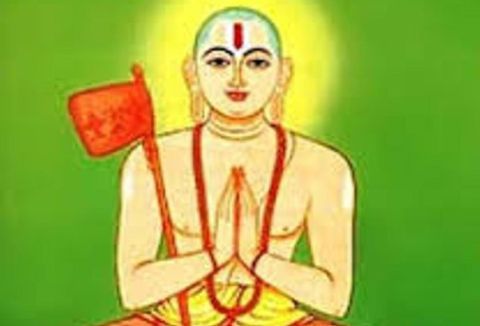
Ramanuja presented the living entities' relationship with Godhead as being one of eternal service. According to Ramanuja, when the living entities are freed from the illusions produced by the material energy by the method of devotion and natural love of God-like the dealings between an affectionate servant and his master—then the soul enters the spiritual sky known as Vaikuntha.
The gaudiya followers of Caitanya claim to be in the disciplic succession descending from Madhvacarya, yet we find certain anomalies which seem to prove otherwise. In light of these points, how can they claim that they are in the line of Madhvacarya, when they have differed from him philosophically and their lineage is so dubious?
The sampradaya institution has existed in this holy land of Bharata since time immemorial. The word sampradaya is a passive nominal formation from the Sanskrit verb root, sam-pra-da ('to hand down'). Lexicographers define it as 'the instruction that is passed down in a line of spiritual masters.' This is also called disciplic succession or guru parampara, and implies that such instruction in spiritual truth is passed down personally from teacher to disciple in a direct chain (srauta-parampara).
There is a fundamental justification in seeking to approach the past history of a sect, especially in this country, on the basis of the prima-facie authenticity of the guru-parampara as preserved in the sect. We would be more scientifically employed if we turn our attention to obtaining greater information by comparative study of the different records instead of resorting to gratuitous assumptions against the validity of the preceptorial lists.
O Divine Master of my Divine Master, my most venerable preceptor, you are supremely worshippable in the group of the foremost associates of Sri Gauranga. May you be gracious upon this servitor surrendered unto your loving servitor (Dayita Dasa). O Gaura Kisora, again and again do I make my obeisance unto you.
His Divine Grace Sri Srila Bhakti Rakshaka Sridhara Deva Goswami Maharaja, the founder of the Sri Chaitanya Saraswat Matha, was born in India in 1895, in a respected Brahmana family of the Bhattacarya order, at Hapaniya, District Burdwan, West Bengal.